


Wind is a powerful force. It drives turbines and cools machinery. But it destroys infrastructure too. Plant managers often ignore wind risks because they focus on production numbers. Then a storm hits. Panels crack. Cranes tip over. Production stops. You lose money.
The solution is simple. You need accurate data. Real-time weather data protects your assets. So this guide helps you choose the right tools. We will focus on Wind Monitoring Sensors from MB Control. These devices track air movement. And they warn you before damage happens.
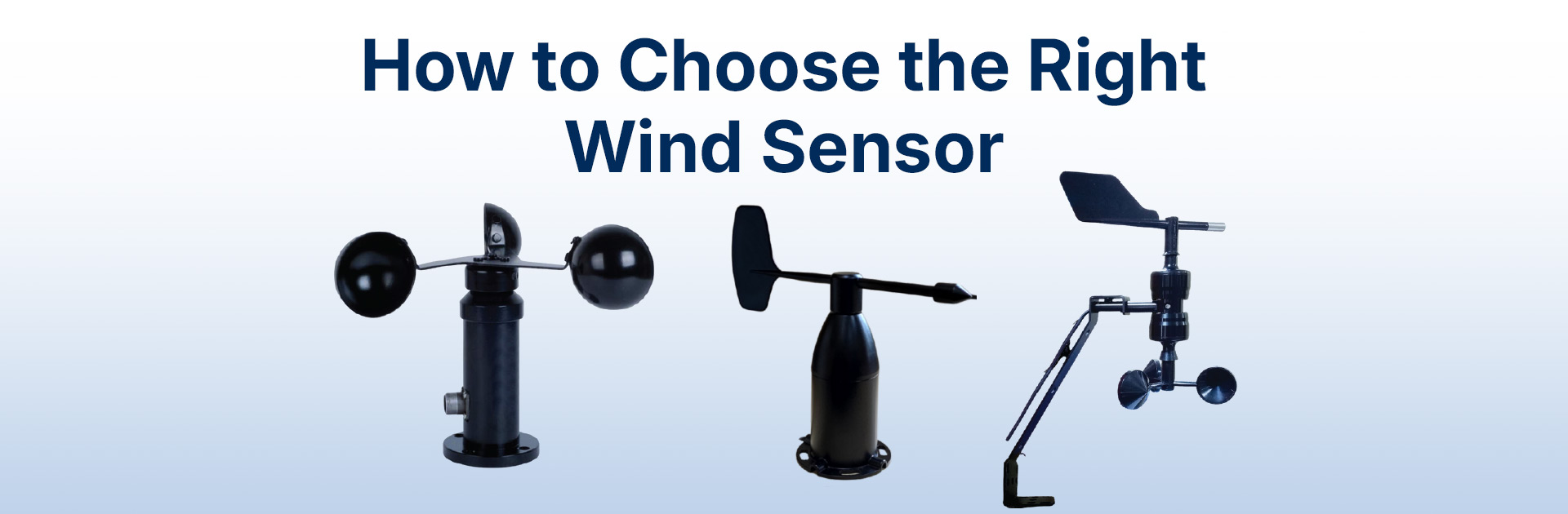
You will learn about three specific devices here. They are the Economic Wind Speed Sensor – MBMet-100, the Economic Wind Direction Sensor – MBMet-110, and the combined Wind Speed and Direction Sensor – MBMet-130.
Industrial plants cover large areas. The weather at one end often differs from the other. A local gust happens fast. Central weather reports miss these micro-events, but your local sensor catches them. So, Wind Monitoring Sensors give you control. You see the exact speed on your site, and you know the direction. This data feeds into your PLC or SCADA system. Then, the system reacts automatically. It triggers alarms. It shuts down sensitive operations.
Solar farms face unique risks. Panels catch the wind like sails. Gusts bend frames and shatter glass. But a Wind Sensor for Solar Plants prevents this. The sensor detects high velocity and signals trackers to stow panels flat. So the wind passes safely. This single action saves millions in damage.
Cranes operate at great heights where wind speeds increase. The boom sways, and loads swing dangerously. But a sensor on the boom removes the guesswork. The operator sees a red light and stops the lift. So accidents are avoided.
Not all sensors work the same. Some break easily. Others give bad data. So you must look for specific traits found in the MBMet series.
Here are the features that matter:
– Low Starting Threshold: The sensor must turn in a light breeze. The MBMet series starts at just 0.5 meters per second.
– Rugged Materials: Sun and rain degrade plastic. So you need aluminum alloys and stainless steel.
– Standard Outputs: The sensor must talk to your controller. MB Control offers 4-20mA, 0-10V, and RS485 Modbus.
– Wide Operating Range: It must survive a hurricane. And it must work in freezing cold.
You need to measure velocity first. Speed causes the physical force. The Economic Wind Speed Sensor – MBMet-100 handles this task. It is a robust device designed for harsh industrial environments.
The MBMet-100 uses a classic 3-cup rotor to capture wind from any side. The polycarbonate cups are light, so they spin easily. But the anodized aluminum body is strong enough to resist corrosion. High-quality bearings allow smooth rotation. So the data remains accurate for years.
You want precise numbers. The MBMet-100 delivers them based on the variant you choose.
Here are the performance details:
– Range: The analog version measures 0 to 30 m/s. But the Modbus version goes up to 60 m/s.
– Survival: It withstands gusts up to 70 m/s.
– Temperature: It works from -30°C to +70°C.
Speed is only half the story. You must know where the wind comes from. This matters for odor control. And it matters for dust suppression. The Economic Wind Direction Sensor – MBMet-110 gives you this vector.
The MBMet-110 uses a 304 Stainless Steel vane. The wind pushes the tail, so the nose points into the wind. It outputs a signal from 0 to 360 degrees. Your system reads this value and maps the direction on your screen.
Chemical plants track wind direction during leaks. The team sees the vector and evacuates the correct zones. Dusty sites use it too. They activate water sprays only when wind blows toward towns. So they save water and stop complaints.
Mounting two sensors takes space. It requires two cables. And it requires two mounting brackets. Many users prefer a compact unit. So the Wind Speed & Direction Sensor – MBMet-130 is the answer.
The MBMet-130 puts the cups and the vane on one body. But it upgrades the materials. The housing uses Carbon-Fiber Reinforced Plastic and aluminum alloy. This makes it incredibly light and strong.
You mount one device. You run one cable. But you get two distinct signals. This unit reduces installation time. You climb the tower once. And you align one bracket.
The MBMet-130 is built for extremes.
– Temperature: It operates down to -40°C. This is better than the separate units.
– Range: Wind velocity can be measured up to an output of 4–20 mA for analog data and up to 70 m/s for Modbus RS‑485.
– Survival: It survives winds up to 75 m/s.
Old sensors were passive and required external counters. But Smart Wind Sensors have internal processors. They filter noise and average readings. Then they send a clean value to your system via Modbus RTU.
You have choices for connectivity. The right choice depends on your existing hardware.
Here are the common signal types available on these units:
– Analog 4-20mA: This is the industry standard. It is immune to noise. And the signal travels long distances.
– 0-10V DC: This is common in building automation. It is simple to measure.
– RS485 Modbus: This is a digital protocol. You connect many sensors on one wire. The sensor sends precise numbers. And it sends error codes too.
A good sensor needs a good location. Bad placement ruins the data. A building blocks the wind. Or a tree creates turbulence. The sensor reads low speed. But the wind is actually high.
You must find clear air. The World Meteorological Organization suggests a height of 10 meters. This is standard.
Here are the placement rules:
– Clearance: Keep the sensor away from obstacles. The distance should be ten times the height of the obstacle.
– Vertical Mounting: The mast must be straight. Use a spirit level. A tilted sensor reads incorrectly. Because the vane will swing to the heavy side.
– Vibration: Mount it on a rigid structure. Vibration damages the bearings. And it creates false readings.
Cables act like antennas. They pick up lightning surges. Wind sensors sit high up. So they are targets for lightning.
You must protect the electronics. Use shielded cables. Connect the shield to the earth ground. Then install a surge protector in the panel. This sacrifices itself to save the sensor.
These sensors are tough. But they need attention. A little care extends their life.
Look at the sensor every few months. Check the cups. Are they broken? Check the vane. Is it bent? Spiders build webs on them. Or birds sit on them. Clean the unit gently.
Spin the rotor with your finger. It should turn freely. It should coast to a stop. But if it stops abruptly, the bearings are bad. Listen for grinding noises. Replace the bearings if needed. Friction causes the sensor to under-report speed.
Sensors drift over time. The output voltage changes slightly. So you should calibrate them yearly. You can send them back to MB Control. Regular calibration proves your data is valid. This is important for legal compliance.
Real-time data is good. But historical data is better. You should record the sensor output. This helps you spot trends.
You might see a pattern. Maybe high winds happen every afternoon. So you can adjust your schedule. You plan crane lifts for the morning. You improve efficiency.
The MBMet sensors work with data loggers like the MBLogger series. You connect them easily. The logger saves the data. Then you access reports from your desk.
You have many options in the market. Some are cheap toys. Others are expensive research tools. But the MBMet series sits in the middle. It balances cost and performance.
A cheap sensor fails quickly. Then you buy another one. You pay for labor again. The total cost rises. A research sensor costs thousands. It is overkill for a plant.
The MBMet-100 and MBMet-110 offer value. They last for years. And the price is reasonable. You get industrial reliability without the research price tag.
MB Control supports their products. They provide manuals. They answer questions. So you are not alone after the purchase. Parts are available. This minimizes downtime.
Solar plants use SCADA systems. These systems manage the inverters and trackers. But the wind sensor is a critical input.
The integration is straightforward. The MBMet sensors connect to the SCADA I/O modules. You map the input channel. Then you set the scaling. 4mA equals 0 m/s. 20mA equals 30 or 60 m/s (depending on your model). The logic is simple.
The SCADA screen shows the wind gauge. Operators trust this gauge. They see the storm coming. Then they verify the stow command.
Do not wait for an accident. Wind is unpredictable. So your plant needs eyes in the sky. The Economic Wind Speed Sensor – MBMet-100 provides the speed data. The Economic Wind Direction Sensor – MBMet-110 adds the vector. And the MBMet-130 does both with advanced materials.
1.What is the difference between the MBMet-100 outputs?
The MBMet-100A provides a 4-20mA signal. But the MBMet-100B provides RS485 Modbus. The Modbus version measures a higher range (up to 60 m/s) compared to the analog version (30 m/s).
2.Does the MBMet-130 require two cables?
No, the MBMet-130 sends both speed and direction data through a single cable. This simplifies installation on tall towers.
3.How precise is the MBMet-110 direction sensor?
The MBMet-110 has an accuracy of ±3°. It provides a resolution of 1°. This is precise enough for all industrial and safety applications.