


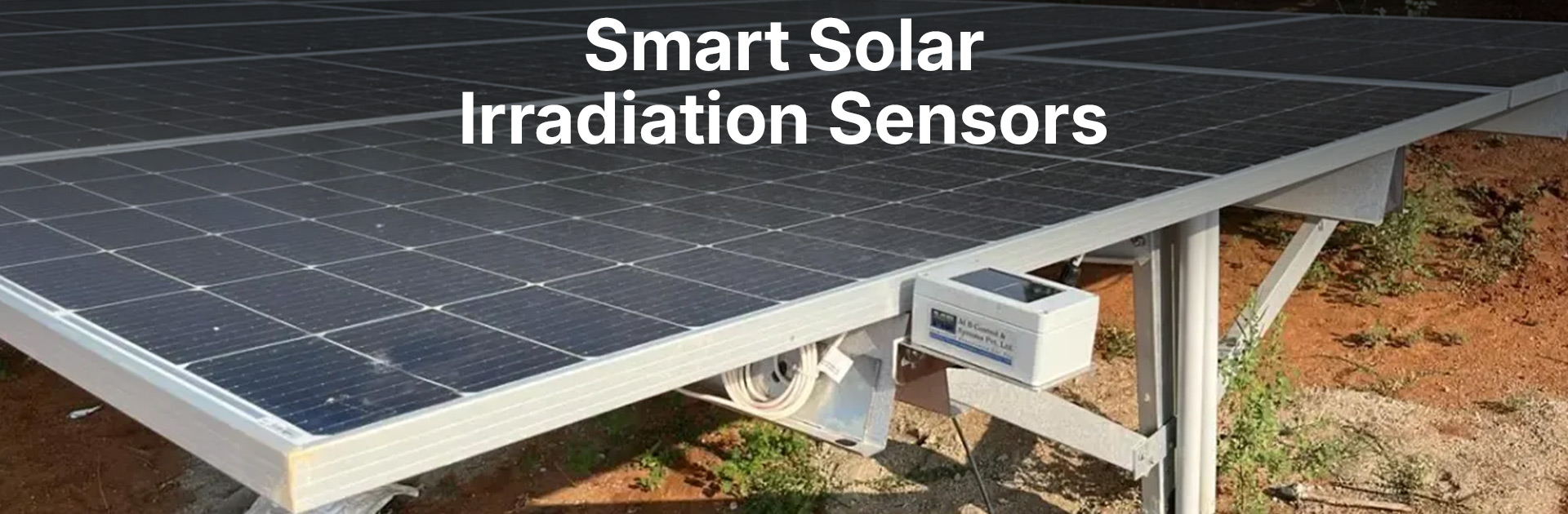
In the race toward cleaner and more efficient energy, solar power plants have emerged as a cornerstone of industrial sustainability. But even as solar capacity expands globally, one consistent challenge remains — performance inconsistency caused by environmental variability.
From fluctuating sunlight to shifting temperatures and unpredictable weather conditions, plant efficiency depends heavily on how well we understand what’s happening in the environment above the panels.
That’s where smart solar irradiation sensors come into play. Devices like the MBMet-501 help engineers, operators, and asset managers not just monitor generation, but interpret how solar conditions impact performance — turning weather data into operational intelligence.
Solar power generation looks simple on paper — sunlight hits the panels, panels generate electricity.
But in practice, it’s far more complex.
Even the most advanced photovoltaic (PV) modules cannot perform at their rated capacity all day. Their efficiency fluctuates with:
1. Cloud cover and diffuse radiation
2. Panel surface temperature
3. Wind speed and ambient temperature
4. Dust accumulation and shading patterns
For plant owners, this creates a daily challenge:
“Is my plant underperforming because of the panels — or because the sun didn’t shine enough?”
Without reliable solar irradiation data, this question remains unanswered.
A smart irradiation sensor provides that missing context, enabling teams to differentiate between performance loss due to weather and actual equipment faults.
A solar irradiation sensor measures the solar energy received per square meter — both direct and diffuse radiation. It records how much sunlight actually reaches the panels, allowing accurate performance ratio calculations.
The MBMet-501 is a next-generation sensor designed to provide high-precision readings of Global Horizontal Irradiance (GHI) and Plane of Array (POA) irradiance — the two most critical parameters for understanding solar generation behavior.
In addition to sunlight data, these sensors can measure:
1. Module surface temperature – to correlate thermal loss with energy output.
2. Ambient temperature – for inverter derating and cooling analysis.
3. Wind speed and direction – as indicators of convective cooling and panel dust levels.
By combining all these data points, operators get a complete real-time understanding of plant performance.
Many solar plants rely only on inverter readings or production logs to judge efficiency. But inverter data alone tells you how much power is generated, not why it changes.
This often leads to:
1. Misdiagnosis of faults (“The inverter output is low, maybe there’s a problem with panels”)
2. Inaccurate energy forecasting
3. Undetected seasonal underperformance
4. Misleading power-purchase agreement (PPA) reporting
For large-scale solar farms under EPC or O&M contracts, even a 1–2% deviation in daily yield can mean major financial differences.
A smart irradiation sensor eliminates this uncertainty by quantifying exactly how much solar energy was available — giving plant managers a reliable performance baseline.
“In solar power, sunlight is your fuel — and you can’t manage a fuel you don’t measure.”
In an industrial solar setup, the irradiation sensor sits at panel height, aligned with the plane of the PV array. It continuously records sunlight intensity and environmental conditions, feeding the data into the plant’s SCADA or energy monitoring system.
This enables key operational insights such as:
1. Performance Ratio (PR): The ratio of actual energy generated to expected energy based on irradiance.
2. Specific Yield: Energy generated per kilowatt-peak (kWp) installed.
3. Loss Analysis: Identifying when low output correlates with low sunlight or system faults.
The result is data-driven operation — where every deviation has an explanation.
If irradiance drops, operators can attribute it to weather.
If irradiance stays constant but output falls, they know it’s a system fault — perhaps a string disconnection or inverter inefficiency.
Modern sensors like MBMet-501 are designed for open-protocol communication, easily integrating into existing plant networks via Modbus RTU/TCP or analog outputs.
When connected with an Energy Management System, these sensors provide not just raw data, but context — combining solar resource availability with energy generation analytics.
A unified dashboard allows:
1. Real-time visualization of solar energy potential vs. actual generation
2. Trend analysis for long-term performance tracking
3. Predictive insights for maintenance scheduling
4. Historical data for compliance and investor reporting
Such integration transforms solar monitoring from reactive to predictive management.
Smart energy management isn’t limited to panels and inverters.
In hybrid renewable systems — solar + diesel + battery — environmental parameters influence how each energy source is dispatched.
That’s why MB Control’s environmental sensors and data loggers (like MBMet series) play a key role across industries. They bring the same clarity to renewable systems that power meters bring to factories — turning invisible variables into actionable data.
| Operational Area | Improvement Through Smart Sensors |
| Yield Analysis | Accurate performance ratio and degradation tracking |
| Maintenance Planning | Correlation of faults with weather patterns |
| Forecasting | Better daily and seasonal energy predictions |
| Investor Reporting | Transparent, validated generation records |
| System Optimization | Inverter derating and panel cleaning scheduling |
These benefits go beyond data — they translate directly into ROI.
When you know the “why” behind every fluctuation, energy management stops being reactive and becomes strategic.
1. Installing sensors without calibration – results in skewed irradiance readings.
2. Incorrect mounting angle – causes data mismatch with actual panel exposure.
3. Ignoring data correlation – without analytics, raw data remains underused.
4. Poor maintenance – dust on sensors can distort accuracy.
5. Overreliance on inverter data – leads to misinterpretation of plant performance.
Regular cleaning, calibration, and system integration are essential for sustained reliability.
The future of solar monitoring lies in AI-enabled analytics.
By combining weather, irradiance, and performance data, future systems will automatically:
1. Detect early signs of module degradation
2. Predict energy output based on cloud movement
3. Recommend cleaning schedules or maintenance windows
Smart sensors like MBMet-501 lay the foundation for this evolution.
They turn sunlight — a natural, variable resource — into structured, measurable, and manageable data.
“Solar intelligence isn’t about more data. It’s about knowing what the data means for your plant.”
Solar power is inherently variable — but your understanding of it doesn’t have to be.
Smart solar irradiation sensors give industries the missing link between sunlight and output, helping them manage performance with precision.
By integrating solar data into broader energy management systems, plant operators can ensure that every watt generated is tracked, verified, and optimized for business impact.
When sunlight becomes measurable, solar becomes truly manageable.