


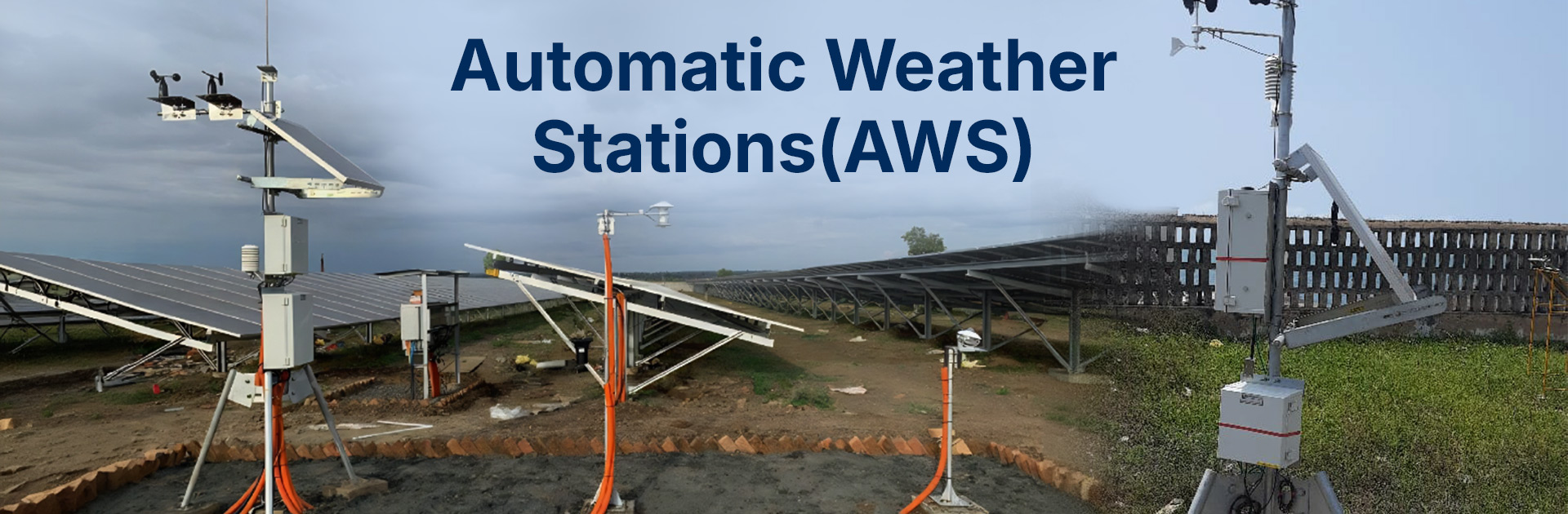
Weather influences everything around us— agriculture, transport, daily life, and even aviation. But without accurate data, predicting it becomes a challenge. That’s why Automatic Weather Stations play such an important role. They measure temperature, rain, wind, humidity — everything that helps to understand climate patterns.
A few decades ago, weather monitoring was processed manually. That process was very slow, very limited and had multiple human errors.
Now, an automatic weather station does this work automatically. It sends real-time data to computers for monitoring. Scientists can monitor weather from anywhere in the world — from a desert research lab or a university office.
In this article, we’ll explore how these stations measure and record weather parameters, why they matter for climate research, and how they solve real problems across agriculture, aviation, energy management, and other fields.
Before automation, weather monitoring had multiple limitations.
The manual readings process was so expensive and impractical. Remote areas like mountains, deserts, or ocean islands had no coverage at all.
“Weather doesn’t wait for working hours — and neither should weather monitoring.”
These problems made accurate climate analysis nearly impossible. Human error welcomes data gaps naturally. You can’t understand long-term patterns when your data has holes everywhere.
An Automatic Weather Station (AWS) is a set of meteorological instruments that measure and record weather parameters automatically.
Unlike manual stations, AWS works continuously. It collects data every few seconds or minutes. Then transmits it through wireless networks to central databases.
A typical AWS measures:
1. Air and ground temperature
2. Relative humidity levels
3. Wind speed and direction
4. Rainfall amount and intensity
5. Atmospheric pressure
6. Solar radiation levels
7. Sometimes soil moisture and temperature
All this information flows into databases where scientists, farmers, pilots, and planners use it for their specific needs.
Let’s see what’s inside a weather monitoring system.
The Sensors
Each sensor measures one specific parameter.
Temperature sensors use electronic thermometers accurate to 0.1 degrees. Much more reliable than old mercury thermometers.
Rain gauges count precipitation using tipping buckets or optical sensors. Every time a set amount of rain falls, the system records it.
Wind sensors have rotating cups that spin faster when the wind increases. Direction sensors work like electronic weather vanes.
Humidity sensors measure moisture content in air — important for understanding heat stress and predicting fog formation.
Pressure sensors detect atmospheric pressure changes. Falling pressure often signals approaching storms. Rising pressure means clear weather.
The Data Logger
All sensors connect to a central unit called a data logger — the brain of the AWS system.
The logger collects readings, timestamps each measurement, stores data temporarily, and transmits it to servers or computers.
Modern loggers are smart. They detect sensor failures automatically. They run on solar power for months without maintenance. They can store weeks of data if communication fails temporarily.
Communication System
Data needs to reach users quickly. That’s where communication technology matters.
Some AWS use cellular networks — like your mobile phone — sending data through 4G or 5G networks.
Others use satellite connections for remote locations where cell signals don’t reach, like mountains, Oceans, and polar regions.
Stations in populated areas often use Wi-Fi or Ethernet cables. It’s faster and more reliable when infrastructure exists.
Power Supply
Most automatic weather stations run on solar power. Solar panels charge batteries during daylight. Batteries keep systems running at night.
This independence is crucial. AWS can operate for years in remote locations without grid electricity or frequent battery replacements.
Climate research isn’t about today’s weather forecast. It’s about understanding patterns over years and decades.
Scientists need consistent data from the same locations, measured the same way, for many years. That’s exactly what AWS provides.
Long-Term Data Collection
An automatic weather station can run for 10, 20, or even 30 years at a fixed location for recording data every single day without fail.
This creates a detailed climate history. Scientists compare this year’s temperature with previous records. They can analyze if the climate is actually changing and how fast.
Without automatic stations, collecting this volume of data would be impossible. Too expensive, too labor -intensive and too prone to communication gaps.
Global Coverage
Climate has an impact globally. What happens in one region affects others through atmospheric and oceanic circulation.
That’s why we need weather data from everywhere, not just from convenient locations.
Automatic stations work where humans can’t easily go, like desert interiors, Mountain peaks. Ocean islands and Antarctic research bases.
This global network gives scientists a complete picture, not just scattered pieces.
Real-Time Analysis
Climate data isn’t just numbers; it’s an early warning for changes that affect millions of lives.
Climate research isn’t only about previous records, it’s also about understanding current changes as they happen.
When heat waves start, rainfall patterns shift, droughts happen – AWS detect these changes immediately.
Scientists can study events in real-time, not months later.
AWS helps many industries solve practical problems daily.
Agriculture and Farming
Farmers need to know when to irrigate crops. When to protect plants from frost. When to harvest before heavy rain.
An automatic weather station on a farm provides this critical information. Temperature forecasts prevent frost damage. Rain data optimizes irrigation schedules. Wind measurements guide pesticide application timing.
Aviation Safety
Airports need accurate weather updates every minute. Wind speed affects takeoffs and landings. Visibility determines whether planes can fly. Temperature affects aircraft performance.
AWS at airports provide continuous data streams. Pilots receive real-time updates. Air traffic controllers make informed decisions. It makes fewer delays and ensures safer operations.
Energy Management
Solar farms need sunlight predictions. Wind farms need wind speed forecasts. Hydropower facilities need rainfall data.
Weather monitoring systems help energy companies plan production capacity. They know when solar generation will peak. When will wind turbines produce maximum power? When will reservoirs refill?
This helps balance supply with demand, making renewable energy more reliable and grid-integrated.
Disaster Warning Systems
Automatic weather stations catch early warning signs of all natural disasters- sudden pressure drops, rapidly rising water levels, extreme temperature anomalies.
When systems detect danger, authorities can warn us early. This way, it saves lives and property.
Climate change is one of humanity’s biggest challenges. But you can’t address what you can’t measure accurately.
Temperature Trends
Is Earth really warming? How much? Where exactly?
AWS around the world measure temperature daily. Scientists combine millions of readings into global datasets. The pattern is clear and consistent — the average global temperature is rising.
Without this network of automatic stations, we’d have opinions instead of evidence.
Precipitation Changes
Climate change affects rainfall patterns. Some places get more rain. Others get less. Some experience extreme downpours. Others face prolonged droughts.
AWS track these changes precisely across regions and seasons. This helps farmers adapt practices. Cities prepare infrastructure. Governments plan water resource management.
Extreme Weather Events
Are storms getting stronger? Heat waves lasting longer? Cold snaps becoming rarer?
Long-term data from AWS answers these questions with facts, not speculation. This information helps insurance companies assess risks. Engineers design resilient structures. Communities prepare emergency responses.
Despite modern technology, challenges remain in weather monitoring networks.
Installation and Maintenance Costs
Professional AWS aren’t cheap. Quality systems cost thousands of dollars. Installation adds more expense, especially in remote locations.
Many developing countries can’t afford adequate station density. This creates data gaps, particularly across Africa and parts of Asia.
Remote Location Accessibility
A station on a mountaintop or in a desert is hard to reach when maintenance is needed. Broken sensors sometimes stay offline for months.
Solar power and robust design help, but can’t eliminate all maintenance needs.
Data Standardization
Different organizations use different measurement protocols. Some take readings every minute. Others every hour. Some use different sensor heights or calibration standards.
This makes data comparison difficult. Scientists must adjust and harmonize datasets, adding complexity and uncertainty.
Modern technology is very advanced.
New sensor technology is shrinking device size while improving accuracy. This means more stations can be installed and fill current data gaps.
Artificial intelligence will help analyze patterns humans might miss. AI-powered systems will detect problems automatically and even predict sensor failures before they happen.
Integration with satellite data will combine ground-based accuracy with space-based coverage to give a complete understanding of the weather everywhere.
Citizen weather networks are expanding, too. Affordable home weather stations let ordinary people contribute data. Thousands of these stations create dense coverage, especially in urban areas, supplementing professional networks.
If you’re planning to install AWS, avoid these errors:
1. Wrong location choice — Don’t install sensors near walls, under trees, or close to heat sources. They need representative, open locations.
2. Skipping calibration — New sensors need verification against standards. Old sensors need regular recalibration.
3. Neglecting maintenance — Plan regular cleaning and inspection. Don’t wait until failures occur.
4. Buying cheap for critical needs — If data quality matters, invest in proper instruments. Cheap sensors produce unreliable data.
5. No data backup — Data loggers can fail. Always implement backup systems and cloud storage.
Automatic Weather Stations ( AWS) transformed how we understand weather and climate. They collect data continuously and accurately from locations throughout the entire globe.
For climate research, it provides essential evidence. To understand planetary changes. To predict future conditions and to prepare adaptation strategies.
But AWS benefits extend far beyond research laboratories. Farmers grow better crops, pilots fly more safely, and cities are better prepared for disasters.
The worldwide network of weather monitoring systems functions like Earth’s nervous system — constantly sensing, reporting, helping humanity understand the environment we depend on.
As technology improves, these stations will be more affordable and more widespread. It’ll provide us with a deeper understanding of climate dynamics and weather patterns.
1. How accurate are automatic weather stations?
A: Modern AWS are very accurate when properly installed and maintained. They eliminate human reading errors and take measurements more frequently than manual systems. Professional stations use calibrated sensors with documented accuracy specifications.
2. Can personal weather stations contribute to climate research?
A: Yes, it contributes with limitations. Personal stations are less accurate than professional equipment but provide valuable supplementary data, especially in areas lacking professional coverage.
3. How often does an AWS need maintenance?
A: Typically, every 3 to 6 months, it needs maintenance. Dusty or coastal locations need more frequent attention. Bad weather conditions also have an impact on it. Its maintenance includes sensor cleaning, calibration checks, connection inspection, and solar panel cleaning. Data quality should be monitored continuously to detect problems early.