


When we think about optimizing an energy system — whether solar, hybrid, or industrial — our minds often jump straight to the hardware: inverters, transformers, or power meters.
But what truly drives these systems to perform efficiently isn’t just the flow of electricity — it’s the environmental data that explains why performance changes.
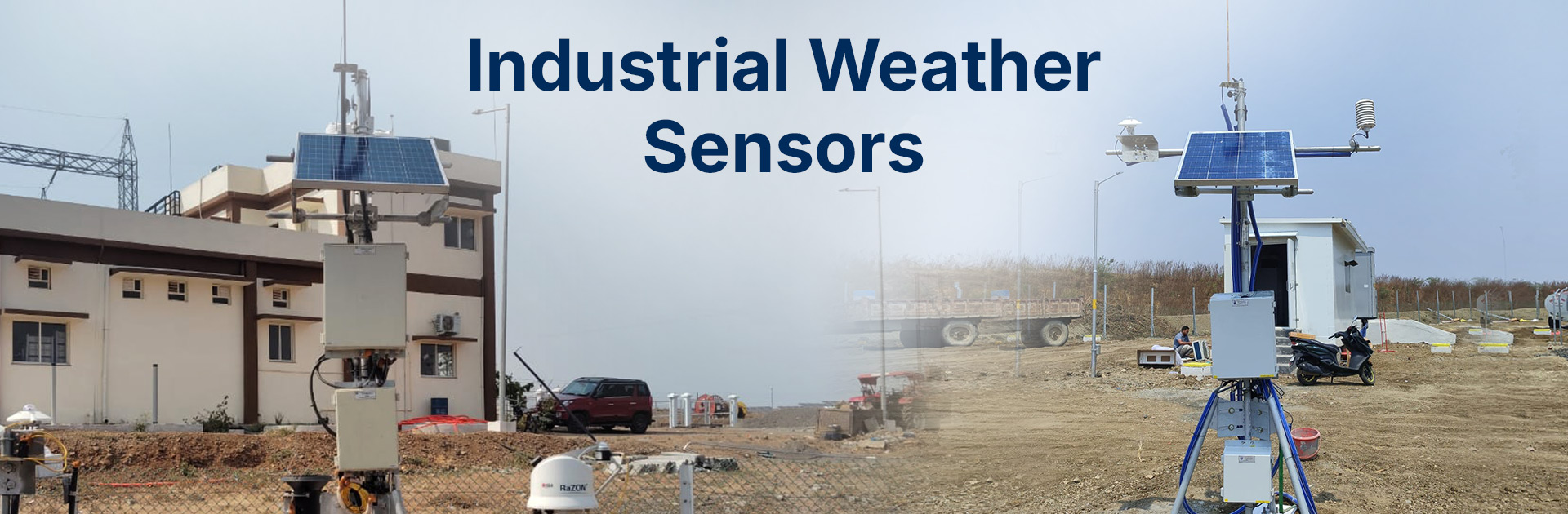
That’s where industrial weather sensors come in. These devices form the invisible layer of intelligence that connects energy generation with real-world conditions — from sunlight and wind to temperature and rainfall.
In this article, we’ll explore the key types of weather sensors used across industrial and renewable energy systems, how they work, and how they help energy managers make informed, data-backed decisions.
Every energy asset performs within environmental limits. When those limits fluctuate — efficiency, reliability, and cost all change.
For example:
1. A solar panel’s efficiency drops as module temperature rises.
2. A wind turbine’s output depends on consistent wind velocity.
3. A cooling system’s load changes with humidity and ambient heat.
Without real-time weather data, these changes are invisible, leaving operators to guess the cause of inefficiencies.
“Weather sensors translate natural uncertainty into actionable data — making energy predictable, not reactive.”
Let’s break down the most critical weather monitoring tools that industrial and renewable systems rely on today.
A solar irradiation sensor measures how much solar energy reaches a given surface.
In solar plants, it’s the foundation of performance analysis — the benchmark that helps compare expected vs. actual energy generation.
Different models, such as the Solar Irradiation Sensor MBMet-500 or the Smart Solar Irradiation Sensor MBMet-501, measure Global Horizontal Irradiance (GHI) and Plane of Array (POA) irradiance.
These readings help operators calculate the Performance Ratio (PR) — a key KPI in solar efficiency management.
Wind plays a dual role — it affects both energy generation (in wind or hybrid systems) and system cooling (in solar or industrial plants).
Devices like the Economic Wind Speed Sensor MBMet-100 and Wind Speed & Direction Sensor MBMet-130 measure air velocity and direction to help determine:
– Cooling rates for solar panels and transformers
– Safety cutoffs during high wind speeds
– Resource potential for hybrid solar–wind plants
Accurate wind data supports both performance forecasting and equipment protection in extreme conditions.
Rain gauges such as the Rain Gauge MBMet-200 track precipitation levels and frequency.
This data is vital for:
– Planning panel cleaning schedules (avoid unnecessary washing right before rainfall)
– Managing site drainage systems
– Correlating solar yield dips with cloud and rain patterns
In large-scale solar farms, integrating rainfall data with irradiance trends improves both maintenance efficiency and resource management.
Temperature and humidity directly influence the performance and lifespan of electrical components.
The Indoor Temperature and Relative Humidity Sensor MBMet-902 measures these parameters with industrial-grade accuracy.
Similarly, the Ambient Temperature and Pressure Sensor MBMet-901 extends monitoring to outdoor conditions.
When correlated with inverter data, these readings reveal the thermal behavior of plants — helping operators prevent overheating, adjust cooling systems, and maintain energy stability.
The PV Module Temperature Sensor MBMet-800 measures the temperature directly on a panel surface.
By comparing module temperature with irradiance, engineers can pinpoint efficiency loss due to overheating — a major factor in hot climates.
This data also supports predictive maintenance, ensuring that energy yield models reflect true operational conditions rather than theoretical assumptions.
When multiple weather sensors are deployed in open environments, radiation shields like the Radiation Shield MBMet-702 ensure sensor accuracy by protecting against direct sunlight, precipitation, and debris.
Without proper shielding, temperature sensors can record false highs — distorting plant analytics. Radiation shields maintain sensor integrity, especially in desert and rooftop applications.
Dust accumulation is one of the most common and costly challenges in solar maintenance.
A soiling monitoring station like the MBMet-700 compares the performance of clean and unclean panels to measure soiling ratio — the percentage of output loss due to dirt buildup.
This helps plan cleaning cycles based on actual need rather than fixed intervals, saving both time and water.
“Data-driven cleaning saves more than just resources — it saves generation hours.”
Each sensor provides a piece of the environmental puzzle. When combined into an integrated weather monitoring system, they give operators a complete 360° view of plant behavior.
By connecting all sensors to a central SCADA or energy monitoring system, industries can:
1. Visualize real-time environmental data
2. Correlate weather variables with energy output
3. Forecast production and maintenance needs
4. Improve compliance reporting for PPAs and ESG initiatives
This interconnected setup ensures decisions are based on verified data — not assumptions.
| Operational Area | Value Delivered by Weather Sensors |
| Energy Efficiency | Identify performance drops caused by heat, wind, or dust |
| Safety Management | Trigger automatic shutdowns during extreme weather |
| Forecast Accuracy | Predict energy yield using historical environmental trends |
| O&M Optimization | Plan cleaning and maintenance using real-time weather data |
| Sustainability Tracking | Log environmental impact data for ESG compliance |
Weather sensors provide the environmental “truth” behind every performance number — helping industrialists invest confidently in system upgrades, expansions, and predictive maintenance.
1. Installing sensors at non-representative locations – always align sensors with the actual panel or machine plane.
2. Ignoring sensor calibration – inaccurate readings distort long-term performance metrics.
3. Neglecting data integration – sensors without connection to monitoring software are underutilized.
4. Overlooking shielding and cleaning – dust or sunlight interference can mislead data interpretation.
Well-maintained weather sensors last for years and continue delivering reliable data with minimal upkeep.
With the growth of AI and IoT, next-generation weather sensors are evolving beyond data collection into predictive modeling tools.
They will soon:
1. Forecast solar generation 24 hours in advance
2. Predict cleaning or cooling needs automatically
3. Detect anomalies caused by atmospheric changes
4. Optimize hybrid solar–wind resource allocation
The future of renewable energy monitoring is adaptive — systems that learn from the weather and self-adjust in real time.
“Tomorrow’s smart plants won’t just react to the weather — they’ll anticipate it.”
1. Can all these sensors integrate into one system?
Yes, all weather sensors communicate via Modbus RTU/TCP or analog outputs, integrating seamlessly with SCADA or energy management systems.
2. How often should these sensors be calibrated?
Typically once a year, though high-dust regions may require biannual calibration.
3. Are weather sensors useful beyond solar plants?
Absolutely. They support HVAC optimization, wind analysis, and industrial energy load forecasting.
4. What’s the best place to install a weather station?
At the site’s representative zone — near panels, turbines, or plant rooftops — free from obstruction and artificial shade.
5. Can data from these sensors be used for ESG reporting?
Yes, environmental data enhances transparency in sustainability metrics and regulatory compliance.
In industrial and renewable systems alike, environmental awareness drives energy intelligence.
Weather sensors bridge the gap between nature and technology — turning sunlight, wind, and temperature into quantifiable performance drivers.
From solar efficiency to plant safety, these sensors ensure that every watt generated, consumed, or stored is understood in full context.
When industries start monitoring the environment as carefully as their energy, efficiency stops being reactive — it becomes predictable.