


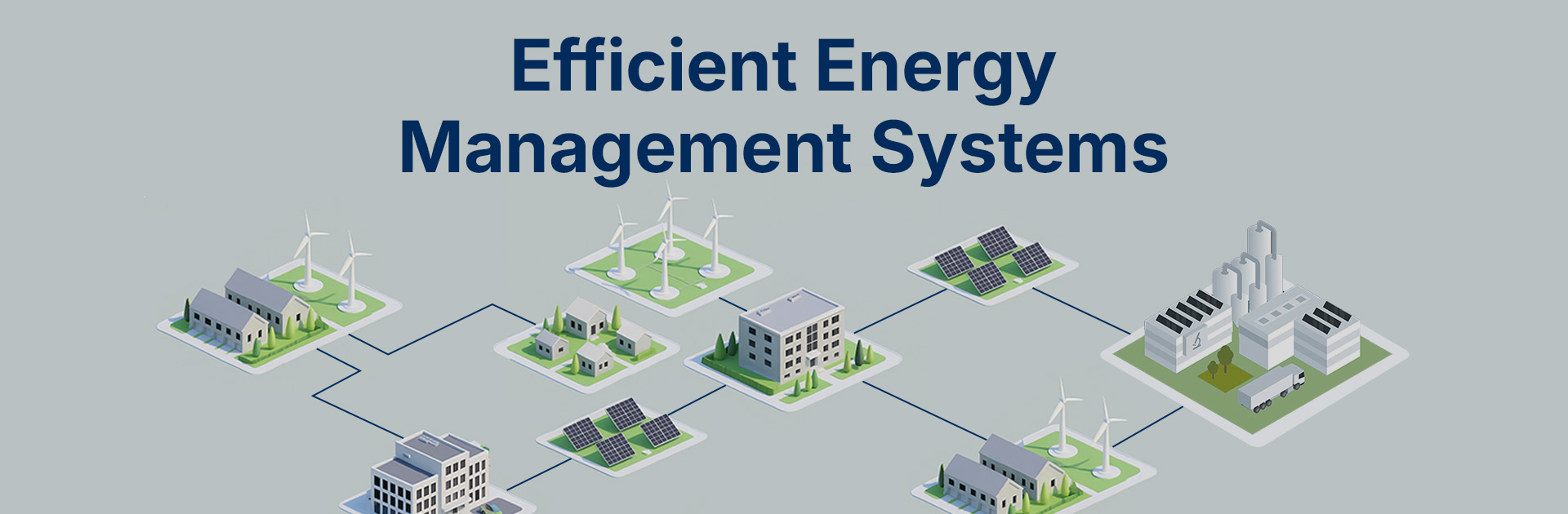
Energy is the lifeline of every industrial and commercial operation — yet, it remains one of the least monitored and most misused resources.
Many organizations still depend on monthly utility bills or scattered meter readings, discovering inefficiencies only when losses have already happened.
This is where a well-designed Energy Management System (EMS) becomes not a gadget, but a practical necessity. When implemented correctly, it helps teams see, understand, and act on their energy data — transforming invisibility into measurable efficiency.
In most facilities, electricity data sits in isolation: meters on different floors, panels without communication, and manual records tucked in logbooks.
Without real-time visibility, decision-makers end up reacting to energy waste instead of preventing it.
Typical issues include:
1. Machines running idle after working hours
2.Poor power factor causing financial penalties
3.Load imbalance damaging transformers and cables
4.Oversized backup systems consuming excess fuel
“Every unmeasured kilowatt becomes a hidden cost, silently eroding operational margins.”
An EMS solves this not by adding more devices, but by connecting existing ones into a unified system.
An Energy Management System collects live electrical parameters — voltage, current, harmonics, frequency, load, and energy — from multiple sources such as meters, inverters, and UPS systems.
This data is converted into meaningful insights through visual dashboards, reports, and alerts.
1. Continuous monitoring: Real-time visualization of data across feeders and equipment.
2. Historical trend analysis: Understanding consumption patterns and long-term losses.
3. Threshold alerts: Early detection of overloads, power dips, or phase failures.
4. Integration with existing infrastructure: Communication via open protocols like Modbus, BACnet, or IEC 61850.
Energy loss doesn’t announce itself — it creeps in.
In multi-shift factories or large campuses, unnoticed patterns accumulate: a few kilowatts wasted per hour turn into thousands of units per month.
Over time, the impact expands:
1. Frequent maintenance due to power quality issues
2. Generator overuse during partial loads
3. Renewable assets underperforming because of poor tracking
4. Unreliable data preventing accurate planning
Without automation or data correlation, these become normalized inefficiencies — accepted simply because they are invisible.
Deploying an EMS isn’t about adding screens to a control room; it’s about building a clear, consistent relationship between energy behavior and operational choices.
Here’s a step-by-step approach followed by successful industrial users:
Conduct an audit of feeders, panels, and major consumers.
Tools like power quality analyzers or multi-function meters help measure starting points.
Integrate existing meters, PLCs, or sensors through industrial communication protocols. This avoids costly hardware replacements.
Create dashboards that answer specific operational questions — not generic visualizations.
For instance, one for production energy per batch, another for renewable generation comparison, and a third for maintenance alerts.
Set thresholds for current, voltage, or harmonics.
Instead of waiting for monthly deviations, automatic triggers allow teams to act the same day.
Energy optimization is continuous. Reviewing trends weekly or monthly turns data into decisions — the real point where ROI starts to appear.
A typical EMS architecture links several components together:
1.Metering points: Capture parameters like voltage, PF, and demand.
2.Communication panels: Collect data using Modbus or TCP/IP.
3.Central server: Stores and analyzes data through SCADA or cloud software.
4.Visualization layer: Displays live dashboards and performance reports.
This general EMS architecture diagram (scroll to “General Architecture” on the page) demonstrates how multiple field devices connect securely to a central control system.
When implemented thoughtfully, an EMS can deliver measurable results that directly affect profitability and reliability.
| Improvement Area | Impact |
| Reduced idle usage | Detects and corrects non-productive power draw |
| Early fault prevention | Monitors real-time voltage and load anomalies |
| Better power quality | Tracks harmonics, PF, and balance across phases |
| Renewable coordination | Integrates solar, diesel, and battery seamlessly |
| Energy accountability | Creates transparent reporting for every department |
These are not theoretical outcomes — they stem from consistent observation and timely action.
Technology enables; people decide.
For an EMS to succeed, engineers, facility heads, and operators must treat energy performance as part of everyday responsibility — not as an IT project.
“Efficiency doesn’t come from automation; it comes from awareness backed by evidence.”
Encourage cross-team reviews, reward reduction targets, and communicate savings in clear metrics rather than percentages.
1.Over-engineering: Connecting everything without defining goals leads to confusion.
2.Ignoring maintenance: Meters and communication lines require periodic calibration.
3.Visual overload: Too many KPIs make dashboards unreadable.
4.No accountability: Data means little unless someone is responsible for acting on it.
5.Treating EMS as one-time setup: Real gains emerge only through routine analysis.
When monitoring becomes habit, optimization follows naturally.
A sustainable EMS implementation transforms energy data from being a compliance requirement into a strategic input for operations, budgeting, and reliability.
Even small steps — connecting existing meters, automating reports, reviewing weekly — can reduce consumption and extend equipment life without heavy capital costs.
1.Is an EMS only for large industries?
No. Any organization with measurable energy consumption — from manufacturing to campuses — can benefit.
2.How does EMS differ from standard energy meters?
Meters show values; EMS interprets patterns, detects anomalies, and supports decisions.
3.What’s a realistic ROI timeline?
Typically between 6 to 12 months, depending on load complexity and corrective actions taken.
4.Can it integrate with solar or battery systems?
Yes. Modern EMS setups support hybrid environments, tracking both generation and consumption for balance.
5.Who should manage EMS data?
Ideally, facility engineers with data review inputs from finance and operations — ensuring that insights drive both technical and cost decisions.