


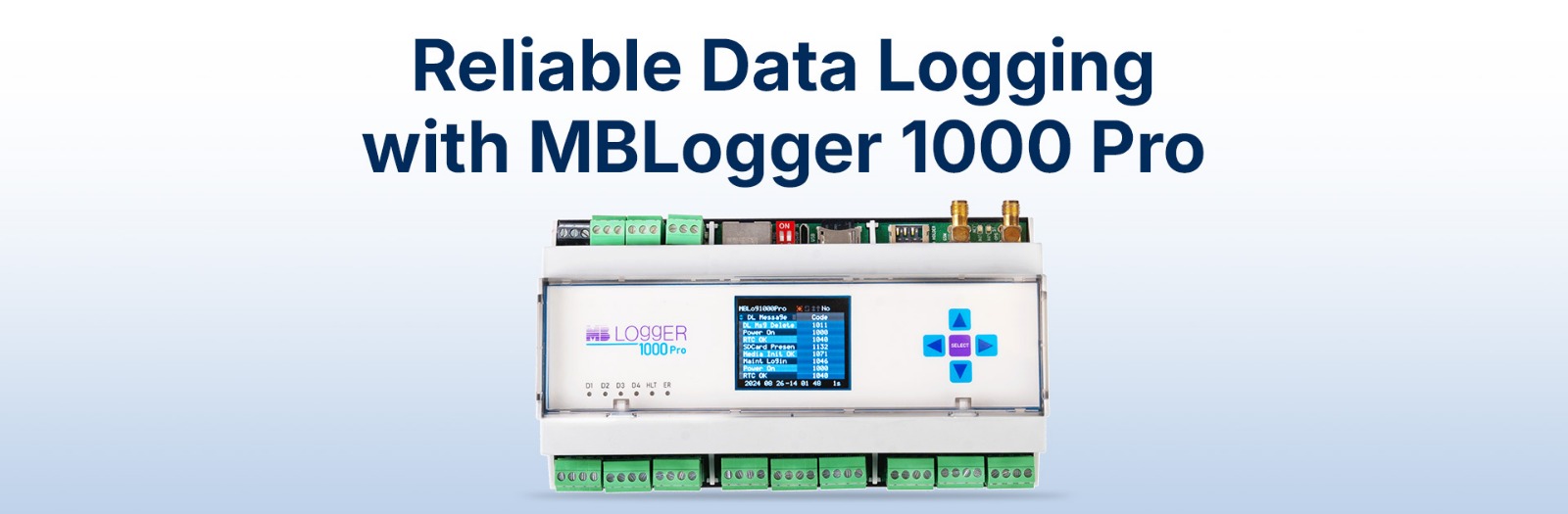
You manage a site with many moving parts. You have machines, sensors, and power systems. They all generate data. You need to capture this data to know if your operation is healthy. You cannot guess. You need facts. This is where a high-quality recording device comes in. The MBLogger 1000 Pro from MB Control fills this need. It is a strong Industrial Datalogger built for accuracy and toughness.
This device sits at the center of your data network, connects to your sensors. It reads their signals, stores the numbers. Then, it sends those numbers to you without gets tired.
A data logger is only as good as its processor. The MBLogger 1000 Pro uses a 32-bit ARM processor. This is a fast chip. It handles many jobs at the same time. It reads inputs, manages memory, and sends data to the cloud. It does all this without slowing down.
Speed is important. Fast signals change quickly. A slow logger might miss a spike in voltage or a drop in pressure. This device catches those fast changes. It keeps your records complete.
Key Processing Features:
– 32-bit ARM Processor: Handles complex tasks easily.
– High Speed: Processes data immediately.
– Multitasking: Logs and transmits at the same time.
You need accurate numbers, a vague reading is useless. Here, The MBLogger 1000 Pro uses two 24-bit Analog-to-Digital Converters (ADCs) unlike most basic loggers use 10-bit or 12-bit converters. You can see the difference is huge.
Think of it like a ruler. A 12-bit ruler has marks every inch. A 24-bit ruler has marks every millimeter. The 24-bit system sees tiny changes that others miss. It gives you very high resolution. This is vital for Reliable Data Logging. You can trust the data it gives you. You can see small trends before they become big problems.
Industrial sites are not comfortable offices. They are hot, cold, and dusty. A regular computer will fail in these places. This Industrial Datalogger loves harsh conditions. It works in extreme temperatures.
It keeps running when it is freezing cold at -40°C. It keeps running when it is baking hot at +70°C. You can put it in a metal box in the sun. You can put it on a mountain top. It keeps working.
Physical Protections:
– Temperature Range: -40°C to +70°C.
– Case Material: Strong Polycarbonate housing.
– Ingress Protection: IP42 rating against dust and water drops.
– Mounting: Fits on a standard DIN Rail.
We live in a connected age. You cannot drive to every site to collect data. You need the data to come to you. The MBLogger 1000 Pro fits perfectly into Smart Monitoring Systems. It has a built-in cellular modem.
This modem supports 4G networks. It works on quad-band frequencies. This means it works in most places with cell service. It sends your data to the cloud automatically. You can sit in your office and see what is happening miles away.
Connectivity Options:
– Built-in Modem: 4G LTE CAT 4 support.
– Ethernet Port: Connects to local networks (LAN).
– RS-485 Ports: Talks to other industrial machines.
– RS-232 Port: Connects to legacy equipment.
Every site has different sensors. You might measure temperature today and flow rates tomorrow. You need a logger that adapts. The MBLogger 1000 Pro has many input channels. You do not need to buy extra converters. You connect your wires directly to the unit.
It supports the most common industrial signals. It handles 4-20mA current loops. This is the standard for most heavy industries. It handles 0-10V voltage signals. It even handles raw millivolt signals.
Input Capabilities:
– Up to 17 Sensor Input Channels: Plenty of room for multiple sensors (analog and digital).
– Current Inputs: 4 channels for 4-20mA (24-bit precision).
– Voltage Inputs: 4 channels for 0-10V.
– Millivolt Inputs: 4 channels for 0-1000mV.
– Digital Inputs: 4 optically isolated inputs for counting pulses.
Talking to a server requires a language. This device speaks many languages. It supports MQTT. This is a lightweight protocol. It is fast and uses very little data. It is perfect for Smart Monitoring Systems.
It also supports FTP. The logger can create a text file of your data. It then uploads this file to your computer. This is simple and reliable. It also supports Modbus TCP/IP. This lets it talk to SCADA systems. It acts as a bridge between your sensors and your control room.
Supported Protocols:
– MQTT: Efficient cloud communication.
– FTP/SFTP: File transfer for records.
– Modbus TCP/IP: Master and Slave support.
– HTTP/HTTPS: Secure web transfers.
– SNTP: Syncs time over the internet.
Networks fail. The MBLogger 1000 Pro protects you. It writes data to internal memory or a 16GB SD card, records every second during outages. Then it uploads the missing files when the connection returns. You lose nothing. This guarantees Reliable Data Logging.
Memory Features:
– Internal Flash: 4GB EMMC memory.
– Expandable Storage: Micro SD card slot (up to 16GB).
– Backfilling: Automatically uploads stored data after reconnection.
You do not need to be a programmer to set this up. You do not need special software on your laptop. The MBLogger 1000 Pro has a built-in web server.
You plug a network cable into the logger. You open a web browser like Chrome or Edge. You type in the address. The settings page appears. It looks just like a website. You can change settings with a few clicks.
Setup Features:
– No Drivers Needed: Works with any standard browser.
– Live View: See sensor values in real-time on the screen.
– Diagnostic Tools: Check modem signal and memory status.
– User Management: Secure login prevents unauthorized changes.
This device is very popular in the solar industry. It does more than just log volts and amps. It has special math functions built inside. It can calculate the position of the sun. It knows the exact sunrise and sunset times for your location.
It can measure the duration of sunshine. It can calculate Albedo, which is the reflection ratio of the ground. These are complex numbers. Usually, you need a computer to figure them out. The MBLogger 1000 Pro does it instantly.
Special Functions:
– Sun Tracking: Calculates Sunrise and Sunset times.
– Sunshine Duration: Tracks how long the sun shines each day.
– Rainfall Totals: Counts tips from a rain gauge to measure daily rain.
– Energy Totals: Sums up power production (kWh).
The front panel has a sharp OLED display. It features a 160 x 120 resolution. You see vital stats like signal strength, IP address, and active alarms. LED lights blink to show power and data flow. They tell you if the power is on or if data is transmitting.
Power supplies vary. You might have a 12V battery. You might have a 24V supply. The MBLogger 1000 Pro accepts a wide range. It takes anything from 9V to 32V DC.
It also uses very little energy. This is important for remote sites powered by solar panels. You do not want the logger to drain the battery. It consumes about 2.75 watts normally. Even when transmitting data, it stays low. This makes it efficient.
Power Specs:
– Input Voltage: 9VDC to 32VDC.
– Low Consumption: ~2.75 Watts (Standard), ~4.10 Watts (with Cellular).
– Battery Backup: Internal Lithium battery keeps the clock running.
You might think about using a cheap solution. Maybe a simple USB stick logger. But those devices fail. They cannot handle the heat. They drift over time. They break when the power spikes.
An Industrial Datalogger like this protects your data. It uses optical isolation. This separates the sensitive chips from the outside wires. If a static shock hits the sensor wire, the logger stays safe. It protects your investment.
It also gives you a real-time clock (RTC). This clock has its own battery. If the main power cuts, the clock keeps ticking. When power returns, the logger knows the exact time. Your data timestamps stay correct. This is crucial for Reliable Data Logging.
This device serves many industries. It is versatile.
Renewable Energy: It monitors solar parks. It connects to pyranometers to measure sunlight. It connects to inverters via Modbus. It tells the owner if the plant is performing well.
Meteorology: Weather stations need tough gear. This logger records wind speed, direction, and humidity. It calculates daily averages. It sends reports to researchers.
Water Systems: It watches over pumps and tanks. It tracks flow rates. It sends an alert via MQTT if a tank gets too low. It helps prevent water shortages.
Data security is a big deal. You do not want strangers seeing your production numbers. The MBLogger 1000 Pro supports secure connections.
It can uses TLS (Transport Layer Security). This encrypts the data as it moves over the internet. It supports HTTPS for the web interface. This is the same security your bank uses. It keeps your data private.
Security Highlights: Encryption supports TLS and HTTPS, User Logs tracks who logs in and out and Password Protection restricts access to settings.
1.Can I connect the MBLogger 1000 Pro to my existing SCADA system?
Yes. It uses Modbus TCP/IP. It works as a Slave or Master. Your SCADA reads it directly. It also gathers data from other meters. Then it sends everything to your system.
2.How does the device handle time synchronization?
Accurate time matters. The unit has a battery-backed clock. It keeps ticking during power cuts. But it also syncs with GPS and the internet. So your timestamps stay correct.
3.What happens if the cellular network signal is weak at my site?
The modem is strong. But sometimes signals drop. The device saves data to internal memory or an SD card then. It waits for the network. Then it uploads the missing records. You miss nothing.